
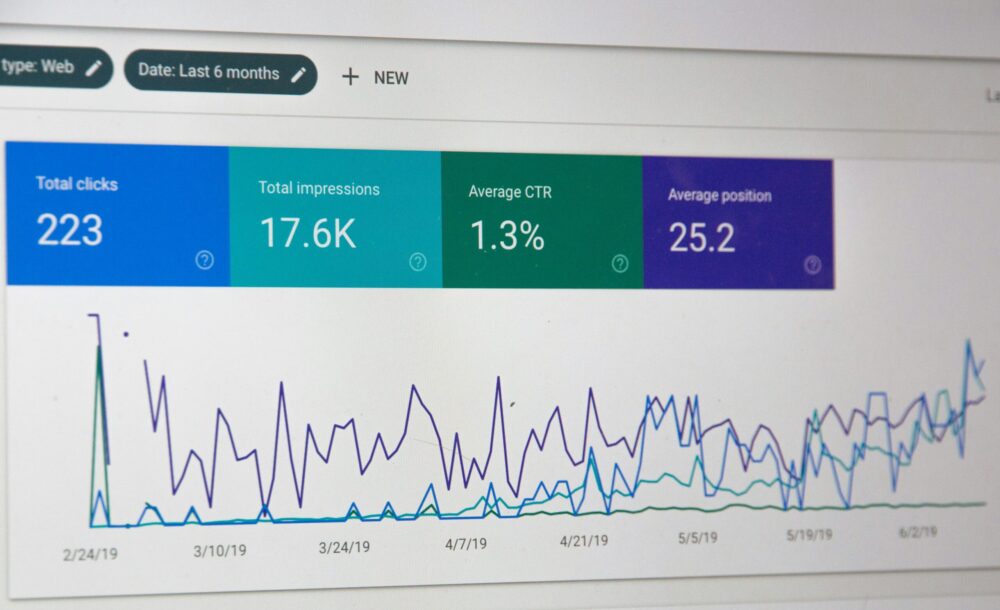
There is a specific type of tension that exists in boardrooms across Seattle during quarterly marketing reviews.
On the screen, the marketing report looks fantastic. The graphs are green. Organic sessions are up 20% year-over-year. Impressions are climbing. The agency or in-house team is celebrating a job well done.
But at the other end of the table, the CFO or the VP of Sales is looking at a different set of numbers. They are looking at qualified leads, closed deals, and actual revenue. And those lines are flat – or worse, declining.
This disconnect is what we call the “Vanity Metric Trap.”
In the digital marketing industry, it is easy to become obsessed with volume. We are trained to chase clicks, maximize impressions, and fight for high-volume keywords. However, for growth-focused executives, traffic without transaction is simply overhead. It costs money to host, manage, and analyze that traffic. If it doesn’t convert, it is a liability, not an asset.
At Spike Interactive, we often onboard clients who have been “successful” in SEO by traditional standards but are failing in business objectives. They have plenty of visitors, but they don’t have customers.
Here is why the gap between traffic and revenue exists, and why fixing it requires a strategic shift from “gathering eyeballs” to “capturing value.”
The Danger of Misaligned Intent
The most common culprit behind empty traffic is a fundamental misunderstanding of search intent.
It is possible to rank #1 for a keyword that gets 10,000 searches a month and see zero ROI. How? By targeting users who are in the “learning” phase rather than the “buying” phase.
Consider a customized home builder in the Pacific Northwest. If their previous SEO strategy focused heavily on broad, high-volume terms like “living room design ideas” or “modern kitchen photos,” they are likely flooding their site with Pinterest-style browsers. These visitors are looking for inspiration, not a contractor. They might browse for three minutes and leave. The analytics show “high traffic” and “good dwell time,” but the sales team sees an empty pipeline.
A revenue-focused strategy ignores the ego boost of high-volume keywords. Instead, it aggressively targets lower-volume, high-intent terms like “custom home builders Bellevue” or “luxury renovation architects Seattle.”
The traffic numbers might drop by half, but if the conversion rate triples, the business grows. This is the strategic pivot where Spike Interactive excels. We don’t just look at what people are searching for; we analyze why they are searching and whether that “why” aligns with your profit margins.
The “Leaky Bucket” of Technical Friction
You spend thousands of dollars and countless hours driving visitors to your site. But what happens the moment they arrive?
We often see businesses treat SEO as purely an acquisition channel, completely ignoring the retention and conversion mechanics. This is the “Leaky Bucket” syndrome. You are pouring water (traffic) into a bucket full of holes (technical friction).
These holes aren’t always obvious. They aren’t just 404 errors or broken links. They are subtle user experience (UX) barriers that kill conversions:
- A mobile menu that is frustrating to navigate on a smartphone.
- A “Contact Us” form that asks for too many fields, causing users to abandon the process.
- Slow load times on product pages that erode trust before the image even renders.
- Call-to-action buttons that blend into the background design.
For a thriving e-commerce brand or a high-stakes legal firm, these technical flaws are revenue killers. A user who finds you via Google is looking for a solution, not a struggle. If your site offers friction, they will bounce back to the search results and click on your competitor.
Repairing the bucket requires a forensic Technical SEO audit that looks beyond code and examines user behavior. We identify where the drop-offs happen and engineer a smoother path from “landing” to “lead.”
The Attribution Blind Spot
Another reason businesses struggle to connect SEO to revenue is that they are looking at the data through a single lens.
In a complex B2B sales cycle – like a SaaS company in Redmond or a commercial real estate firm in Tacoma – a customer rarely searches once, clicks once, and buys immediately. The journey is messy. They might find a blog post via organic search on Monday, see a retargeting ad on Wednesday, look up reviews on Friday, and finally convert via a “brand name” search the following week.
If you are only looking at “Last Click” attribution, your organic content looks like it failed. It didn’t get the credit for the sale, so you stop investing in it. In reality, that organic content was the critical introduction that started the relationship.
Without a sophisticated data strategy, you might cut the very tactics that are filling the top of your funnel.
At Spike Interactive, we help businesses move beyond basic analytics. We look at the holistic ecosystem, often integrating PPC data with organic insights to understand the full customer lifecycle. We help you understand which touchpoints are actually driving revenue, ensuring you aren’t making budget decisions based on incomplete data.
Geography vs. Authority
For businesses with a physical service area, “Global” traffic is effectively “Zero” traffic.
We recently audited a medical practice that was thrilled about their blog traffic. They had a viral article ranking nationally. However, when we looked at the geo-data, 90% of that traffic was coming from the East Coast and Europe. For a clinic based in Seattle, that traffic was worthless.
This happens when a strategy prioritizes general authority over local relevance. Ranking for “best physical therapy exercises” is great for ego, but ranking for “physical therapy near South Lake Union” pays the rent.
Effective Local SEO is about discipline. It is about signaling to search engines that while you are an expert, you are an expert here. It involves pruning the reach to maximize the grasp. We help businesses recalibrate their signals so they stop wasting server resources on visitors who can never become customers, and start dominating the local pack where the actual revenue lives.
The Content-Sales Gap
Finally, the disconnect often lies in the content itself. Many marketing teams create content to “rank,” not to “sell.”
They produce generic guides that answer basic questions but fail to position the company as the solution. They might write 2,000 words on “The Benefits of Cloud Computing” without ever mentioning their own proprietary cloud migration software.
The reader gets the information they need and leaves to buy the software from a competitor who made a better pitch.
Your content needs to do double duty. It must satisfy the search algorithm’s hunger for relevance while simultaneously acting as a sales rep. It needs to handle objections, showcase social proof, and guide the user toward a consultation or purchase.
Bridging this gap is difficult. It requires a writer who understands SEO and a strategist who understands sales psychology. It is rarely something that can be achieved by checking off keywords on a list.
Moving From Metrics to Money
There is a time and place for vanity metrics. They are useful for measuring brand awareness and general visibility. But they should never be the primary KPI for a business focused on growth.
If you are tired of reports that show “success” while your bank account shows stagnation, it is time to change the conversation. You don’t need more traffic for the sake of traffic. You need a strategy that filters, qualifies, and converts.
Transitioning from a volume-based strategy to a value-based strategy is complex. It requires auditing your entire digital presence, from the technical code to the intent behind your keywords. It is not a quick fix, but it is the only path to sustainable digital ROI.
At Spike Interactive, we don’t just report on rankings. We report on growth. We align our digital levers with your business goals to ensure that every click has a purpose.
Let’s stop chasing numbers and start chasing revenue. Contact Spike Interactive for a Revenue-Focused SEO Audit